Tuesday, February 1, 2011

Chateau Phélan-Ségur (St Estèphe) 2006

Chateau Phélan-Ségur dates from the early 19th century, when two St Estèphe estates were brought together, purchased by the wealthy M Phélan. The lesser of these was the Clos de Garramey, but the more impressive was Ségur, once part of the estate of Nicolas-Alexandre de Ségur, otherwise known as the Prince of Vines, who owned a few other estates that went by the illustrious names of Brane-Mouton, Lafite (both destined to come to the Rothschild family) and Latour. Hence, with the construction of a most imposing residence which puts many classed growth properties to shame, including an impressive chai and cellar, Chateau Phélan-Ségur was born.

The vineyards at Phélan-Ségur amount to 64 ha in all, approximately one third of the estate which is 180 ha all told. The vineyards are located on a gravelly mound, and are planted with 60% Cabernet Sauvignon, 30% Merlot and 5% Cabernet Franc at a density of about 8500 vines/ha and an average age approaching 35 years.

The winery is high tech, with Gardinier being one of the few proprietors to admit to reverse osmosis, to which both the 1998 and 1999 vintages were subjected. Fermentation is temperature-controlled in stainless steel, all this kit being stored in Phélan-Ségur's capacious chai. The wine sees eighteen months in oak, 50% new, before fining, filtration and bottling.

2006
This has sweet, nutty oak and dark fruit evident on the nose. A supple, gentle character on the palate, but with a lot of tannins underneath, although admittedly with a ripe feel to them.

2009
A very dark hue, with a nose of macerated black cherry. The palate possesses a rather dry shell of fruit, supple and fairly reserved, and the tannins here seem quite well composed. There is nice acidity, and a touch of vigour to it. Only moderate concentration here, but as a whole it is sensibly done, and therefore admirable.

Louis Latour - Aloxe-Corton 2004

Aloxe-Corton has been the home of the Latour family and the heart of Domaine Louis Latour for centuries. Vinification, traditional open vat fermentation followed by 10 to 12 months ageing in oak casks.

This light ruby colored wine is complex with intense red pinot fruit aromas. Flavours of cherry are complemented with floral notes and some earthy hints. In the mouth, this 2004 Aloxe-Corton is very well-balanced, with supple tannins. A length and harmony that will evolve beautifully within a few years.

Chateau Lynch Bages (Pauillac) 2006

The finest Lynch Bages made since the 2000 (the vintages between 2000 and 2006 are certainly very good). It will be at its peak in 5-6 years, and should keep for 20 or more.

The 2006 is made from 79% Cabernet Sauvignon, 10% Cabernet France, 10% Merlot and 1% Petit Verdot. Elevage in 70% new oak with a third of the crop being relegated to the 2nd label - Haut Bages Averous. The 2006 is full-bodied finish with plenty of wrapping sweetness. The nose offers an attractive interplay between deep, buttery black fruits, Medocain minerals and a cool, minty Cabernet character.

"The wine has plenty of structure a la 1995 and a backward, muscular personality, but beautiful fruit on the attack and alluring purity and a nicely textured mouthfeel. The finish suggests cellaring for 3-5 years and drinking over the following two decades." -- (Score 92) Robert Parker, Wine Advocate (181), February 2009.

2001
Dark, smoky, nutty fruit on the nose. Lovely! Full textured palate. Ripe tannins with good acidity. May need eight years plus in the cellar. This is very good and has super potential.


Monday, June 7, 2010

Château Grand-Puy-Lacoste (Pauillac) 2004

The origins of Grand-Puy-Lacoste, as well as that of its twin Grand-Puy-Ducasse, lie in a single estate that existed in the northern parts of the commune around Pauillac in the Middle Ages. The Grand Puy, puy being another of the seemingly endless litany of words which refer to a hill or mound, lies a few kilometres inland of the town of Pauillac. Dejean was a fairly wealthy landowner, buying and selling land; he owned the nearby Lynch-Bages as well as the vineyards on the Grand Puy. In 1750 he sold some of the latter vineyards to Pierre Ducasse, and common sense would suggest that this was the origin of Grand-Puy-Ducasse. What remained with the family, subsequently inherited by one of his daughters, was the origin of Grand-Puy-Lacoste.

The estate incorporated the Grand Puy, one of the many gravel croupes which are a feature of the Haut-Médoc, and which often provide the perfect terroir for Cabernet, and as a consequence they have an association with many of the greatest estates of the region. The vineyards now cover 55 hectares of the Pauillac commune, lying across two of the all important gravel croupes. The vines are predominantly Cabernet Sauvignon, accounting for 75%, the remainder Merlot, planted at a density of 10000 vines/ha, and with an average age of 40 years. As might be expected, harvest is manual, the fruit destemmed and then fermented in temperature-controlled stainless-steel where it remains for up to three weeks before going into oak for up to twenty months. Of this, up to 40% will be new wood each vintage.

The grand vin is Chateau Grand-Puy-Lacoste, of which there are up to 18000 cases per annum, and there is a second wine, Lacoste-Borie.

2004
A densely packed nose, full of sweet raspberry coulis, bright, vibrant and attractive. Nice flesh on the palate, with stony raspberry fruit and a little touch of greenness, well framed by the acidity. Good, slightly tarry tannins.

2009
Cabernet Sauvignon 80%, Merlot 18%, Cabernet Franc 2%. 70% new oak. Yield 44 hl/ha. Vibrant hue, cherry red core, and a bright pink-red rim. Dark and characterful fruit on the nose, full of Pauillac spice, with a crystalline tinge to the plum and cherry fruit. Beautiful texture on entry, it has the vibrant fruit of a cooler vintage than this, with a supple and elegant texture. Very well integrated and cottony-silky tannins, gently coating the mouth, together with lots of fresh acidity. Lovely fruit, but with fine structure for the future. Substantial finish with a good length.

Lotus - by the 800mm reflective lense

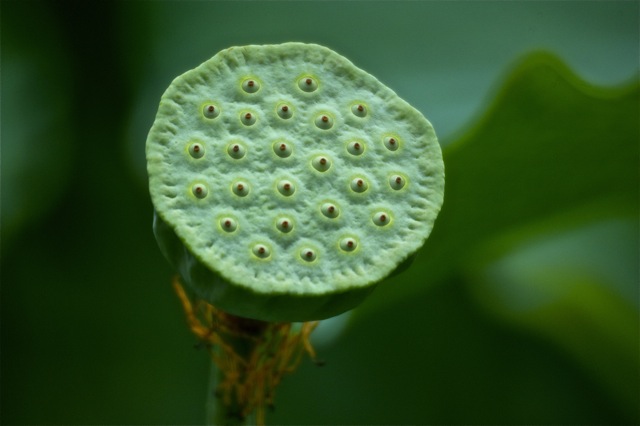
Lotus, is a plant in the Nelumbonaceae family. It is the national flower of India and Vietnam.

This plant is an aquatic perennial. Under favorable circumstances its seeds may remain viable for many years, with the oldest recorded lotus germination being from that of seeds 1300 years old recovered from a dry lakebed in northeastern China.

A common misconception is referring to the lotus as a waterlily (Nymphaea), an entirely different plant as can be seen from the center of the flower, which clearly lacks the structure that goes on to form the distinctive circular seed pod in the Nelumbo nucifera. Waterlilies come in various colors, whereas the lotus has flowers only in hues of pink, or white.
Source -- "Wikipedia"


Single Exposure
Open or Not Open


Green Dance


Night Dance


Close Up


Multi-Exposure
Super Depth of Field


Dancing Pink

Monday, May 17, 2010

Perspective

Cheung Chau Island- one week before the Bun Festival

Circle + Square


Yellow / Red


Clown and child


Details in shadow


West meet East

Monday, April 12, 2010

學問 ` 文章

世事洞明皆學問,
人情練達即文章.
- 曹雪芹